


 Cart
Cart
 sales@molnova.com


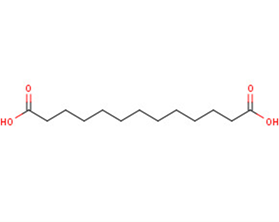
111-Undecanedicarboxylic acid
CAS No. 505-52-2
111-Undecanedicarboxylic acid( 113-Tridecanedioic acid | Brassilic acid )
Catalog No. M20059 CAS No. 505-52-2
Undecanedicarboxylic acid is an unusual odd-numbered dicarboxylic acid that appears in the urines of children with neonatal adrenoleukodystrophy and Zellweger syndrome as an additional marker of these peroxisomal disorders.
Purity : >98% (HPLC)
 COA
Datasheet
HNMR
HPLC
MSDS
Handing Instructions
COA
Datasheet
HNMR
HPLC
MSDS
Handing Instructions
| Size | Price / USD | Stock | Quantity |
| 500MG | 35 | In Stock |


|
| 1G | Get Quote | In Stock |
|
Biological Information
-
Product Name111-Undecanedicarboxylic acid
-
NoteResearch use only, not for human use.
-
Brief DescriptionUndecanedicarboxylic acid is an unusual odd-numbered dicarboxylic acid that appears in the urines of children with neonatal adrenoleukodystrophy and Zellweger syndrome as an additional marker of these peroxisomal disorders.
-
DescriptionUndecanedicarboxylic acid is an unusual odd-numbered dicarboxylic acid that appears in the urines of children with neonatal adrenoleukodystrophy and Zellweger syndrome as an additional marker of these peroxisomal disorders.
-
In Vitro——
-
In Vivo——
-
Synonyms113-Tridecanedioic acid | Brassilic acid
-
PathwayOthers
-
TargetOther Targets
-
RecptorOthers
-
Research Area——
-
Indication——
Chemical Information
-
CAS Number505-52-2
-
Formula Weight244.33
-
Molecular FormulaC13H24O4
-
Purity>98% (HPLC)
-
SolubilityDMSO: 40 mg/mL;Water:Insoluble
-
SMILESOC(=O)CCCCCCCCCCCC(O)=O
-
Chemical Name——
Shipping & Storage Information
-
Storage(-20℃)
-
ShippingWith Ice Pack
-
Stability≥ 2 years
Reference



-
P110
Dynamin-related protein 1 (Drp1) inhibitor, inhibits Drp1 GTPase activity. Displays no effect on dynamin 1 or other mitochondrial dynamics-related proteins. Inhibits mitochondrial fission, dysfunction and reactive oxygen species (ROS) production in vitro. Reduces programmed cell death and improves cell viability by protecting mitochondrial integrity. Reduces mitochondrial fragmentation and mitochondrial ROS production in mouse model of Parkinson's disease. Cell permeable.
-
1,7-Diphenyl-4-hepte...
1,7-Diphenyl-4-hepten-3-one has feeding deterrent activities against Tribolium castaneum.
-
GsMTx4 TFA
GsMTx4 TFA is a spider venom peptide that selectively inhibits cationic permeable mechanically-sensitive channels (MSCs) belonging to the Piezo and TRP channel families.
